
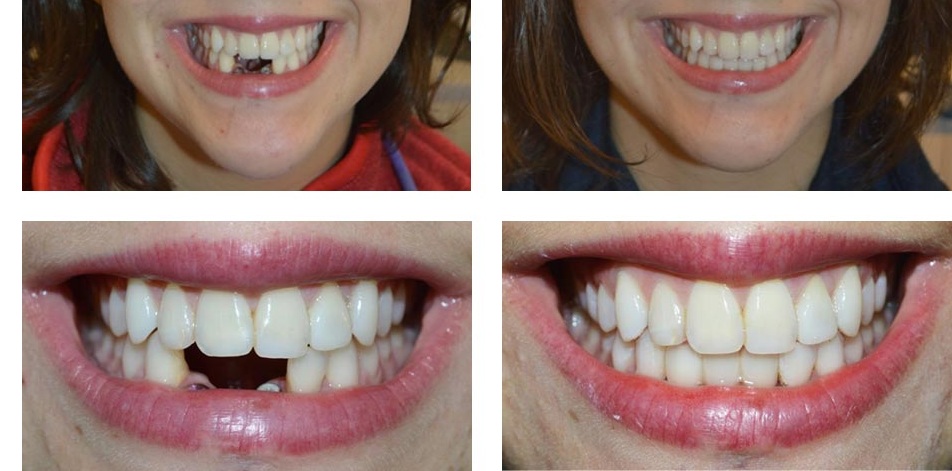
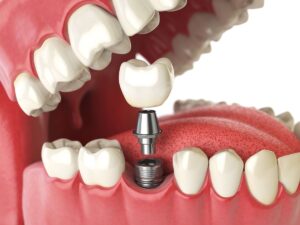
Dental implant placement is the surgical procedure of inserting a biocompatible artificial tooth root, typically made of titanium, into the jawbone. This implant serves as a stable foundation for a replacement tooth or teeth, such as a bridge, crown, or denture. Implant placement is the first critical step in a comprehensive process to replace missing teeth with a long-lasting and functional solution that closely mimics the look and feel of your natural teeth.
Implant placement benefits:
- Replaces missing teeth
- Provides a stable foundation
- Preserves jawbone
- Improves function & aesthetics
The general stages of this process include:
- Initial Consultation and Planning Surgical Placement of the Implant
- Healing Period (Osseointegration)
- Abutment Placement
- Placement of the Final Restoration

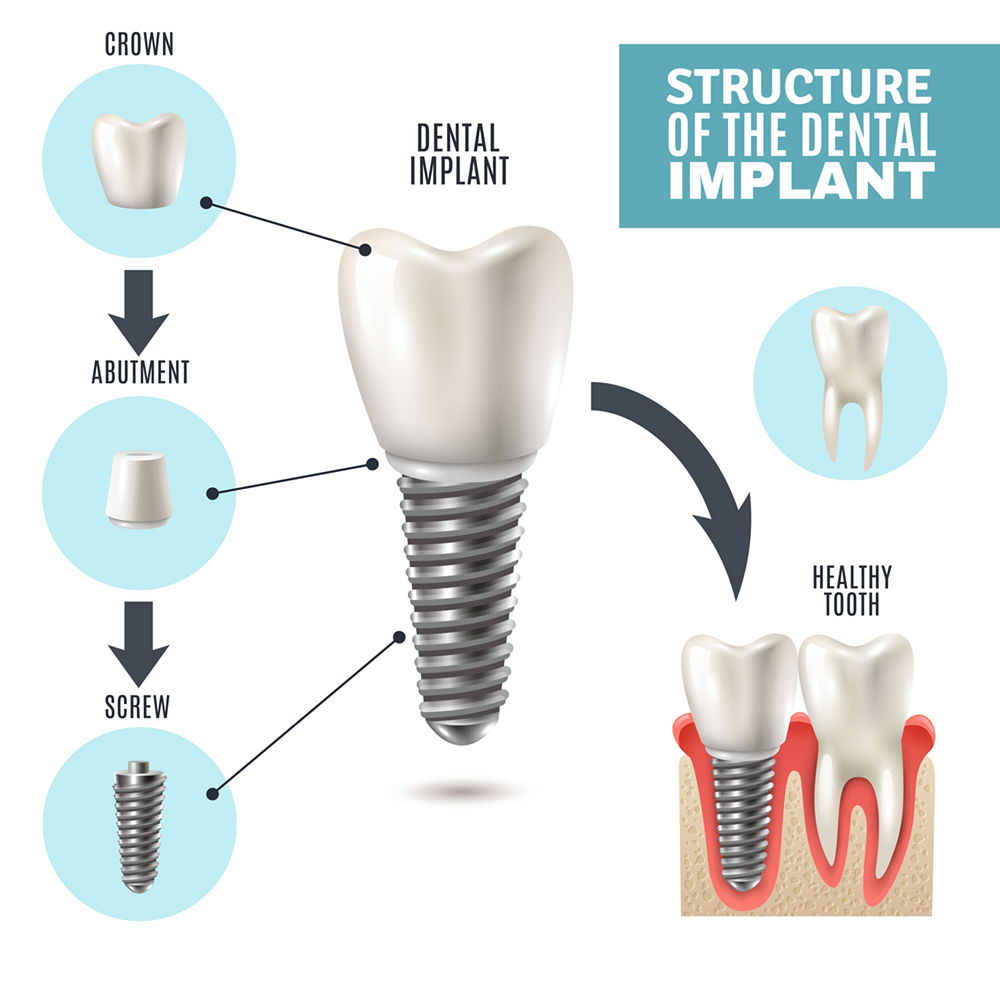
Dental Implant Placement
Step-by-Step Process
1. Tooth Extraction & Bone Graft
If the tooth is damaged, it is gently removed.
A bone graft is placed the same day to strengthen the area for a future implant.

This graft helps your body build a solid foundation for the implant.
2. Healing Period (2-3 Months)
The grafted bone heals and becomes strong enough to support the implant.
You’ll be re-evaluated with an X-ray or 3D scan to confirm bone readiness.
- The healing time may be shorter, as determined by your dentist.
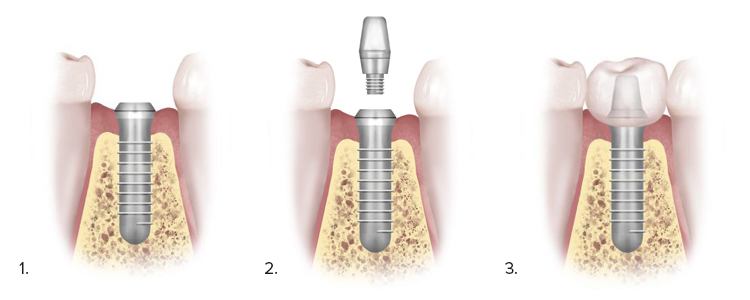
3. Implant Placement
A small titanium post (the implant) is placed into the bone under local anesthesia.
The implant acts as an artificial tooth root.
Healing time: typically 2–3 months for the bone to bond to the implant.
4. Healing Cap Placement(2-3 months after the implant placement)
Once healed, we uncover the implant and place a healing cap to shape the gums.
This step prevents the gum from closing over the implant and allows easy access for the next visit.
5. Impression or Digital Scan
We take a precise impression or 3D digital scan of your teeth and implant position.
This information is sent to our dental lab to create your custom crown.
6. Crown Placement
The final implant crown is either cemented or screwed into place.
It is color-matched and shaped to blend naturally with your smile.
🕓 Total Timeline: Usually 2–5 months from start to finish
📅 Total Visits: About 3–4 appointments
Immediate Implants
In some cases, we can place the implant the same day as the extraction.
This is called an immediate implant, and it saves time and extra healing steps.
However, not everyone qualifies — we’ll take a 3D scan (CBCT) to evaluate:
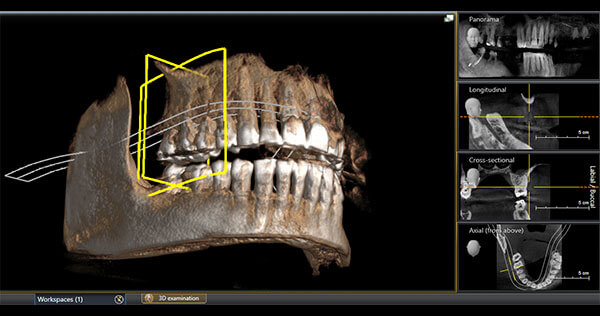
Bone density and volume
Presence of infection
Gum and bite conditions
If the bone is healthy, an immediate implant can be placed safely on the same day.
Frequently Asked Questions
🦷 How painful is the procedure?
The procedure is typically painless, as it’s done under local anesthesia.
Most patients describe mild soreness afterward, similar to a simple extraction.
Ibuprofen 600 is the most commonly prescribed medication to take care of the pain for 2-3 days following the procedure
⏱ How long do dental implants last?
With proper care and regular cleanings, implants can last a lifetime.
🍎 When can I eat normally again?
Soft foods are recommended for the first few days, then you can return to your regular diet as you heal.
🧼 How do I care for my implant?
Brush and floss just like your natural teeth.
Keep up with cleanings every 6 months to protect your investment.
💰 How much does it cost?
The total cost depends on how many implants and what type of restoration is done.
We’ll review all options and payment plans during your consultation. Our current special is $999 for the implant placement. The abutment and crown are extra.
📷 Why is the 3D scan important?
A 3D scan helps us see the bone, nerves, and sinuses — ensuring your implant is placed safely and precisely.
Call us today at (215) 558-4205 to schedule an appointment!